Modern Work Security Priorities for Philippine Organizations in 2026
Modern Work security failures in the Philippines rarely begin with a dramatic system breach. More often, they start quietly, through everyday actions that feel routine and justified at the time.
A supply chain manager shares a time-limited link because a partner is waiting. An HR contractor’s access remains active a few days beyond the end of a project. An executive, moving between meetings in Makati, taps a re-authentication prompt on a mobile device without pausing to validate it. None of these actions register as a security incident in isolation.
By the time IT is alerted, the problem is no longer whether perimeter defenses existed. The issue is why legitimate credentials were able to access, move, and sometimes exfiltrate sensitive data across trusted platforms without early containment.
This is the defining security shift heading into 2026.
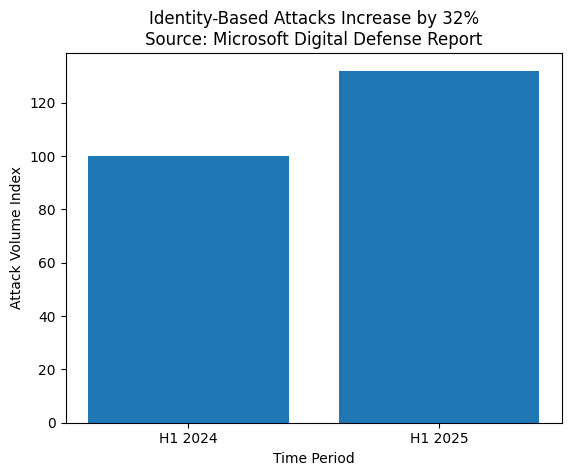
Microsoft’s Digital Defense reporting continues to show that identity-based attacks dominate initial access globally, with phishing and credential abuse far outpacing infrastructure exploits. In Southeast Asia, these attacks are especially effective because cloud collaboration platforms are deeply embedded into daily operations. Activity appears normal until it is not.
At the same time, regulatory expectations in the Philippines are tightening. The National Privacy Commission (NPC) has emphasized faster breach notification, clearer evidence of containment, and stronger accountability around access governance. Sector regulators, including the Bangko Sentral ng Pilipinas, increasingly expect security controls to demonstrate operational resilience, not just technical compliance.
In this environment, Modern Work security failures are no longer quiet IT issues. They quickly become operational, regulatory, and leadership concerns.
Why Modern Work Security Feels Harder Than It Should
Across Philippine enterprises, the Modern Work environment has become the core business layer. Email, cloud identities, collaboration platforms, and shared documents now sit directly on payroll processing, vendor payments, customer data, and regulated workloads.
At the same time, attackers have followed the same path.
Regional threat intelligence consistently highlights several trends:
- Identity compromise and phishing are the most common initial attack vectors
- Business email compromise remains a leading cause of financial loss
- Third-party access and legitimate credentials are involved in a large share of incidents
What makes these incidents difficult is not just frequency, but proximity to business operations.
When an attack originates inside Modern Work platforms, it bypasses traditional perimeter defenses and propagates through legitimate access paths. It surfaces during normal operations, not during outages or visible system failures
Security teams are therefore pressured from multiple directions. Controls must stop real threats, satisfy regulators, and avoid disrupting daily work. Without clear prioritization, effort spreads thinly and friction appears where it is least tolerable.
The challenge is not just a lack of tools. It is a lack of focus on where incidents actually escalate.
Why 2026 Changes the Security Conversation
Modern Work security is no longer a technical tuning exercise. By 2026, it has become a planning issue because incidents now escalate faster, spread wider, and carry consequences beyond IT.
Incidents Now Escalate Faster
Security incidents that originate in Modern Work platforms rarely stay within the security team. In the Philippines, breach notification expectations and sector oversight increasingly require early involvement from legal, compliance, communications, and executive leadership.
Guidance from the National Privacy Commission emphasizes notification without undue delay once a breach is suspected. This often forces response before full technical certainty is available. In regulated industries such as financial services, supervisory expectations around operational resilience further compress response timelines.
At the same time, Microsoft’s Digital Defense reporting consistently identifies compromised credentials as the dominant initial access method. When those credentials belong to real employees or contractors, incidents immediately affect business operations.
Security leaders are therefore expected to answer critical questions early:
- What data was accessed?
- Which identities were involved?
- Has exposure been contained?
- Which controls worked and which did not?
Organizations that cannot answer clearly often lose control of the response before remediation is complete.
Modern Work Incidents Are Harder to Contain
A single compromised identity can access email, Teams conversations, SharePoint and OneDrive files, and connected SaaS applications in a short period of time.
Microsoft telemetry shows attackers increasingly use normal collaboration activity to understand data structures, permissions, and sharing behavior before acting. When logs and signals are fragmented across identity, email, devices, and cloud services, investigations slow and containment decisions become riskier.
Industry research consistently shows that organizations with integrated detection and response capabilities reduce containment time significantly compared to those relying on isolated tools and manual correlation.
Security Is Judged by Its Impact on Operations
Security effectiveness is no longer measured only by compliance or control coverage. It is measured by whether risk can be isolated without disrupting essential operations.
Shutting down collaboration platforms or broadly restricting access is rarely acceptable, especially in Philippine environments where hybrid work, shared services, and shift-based operations are common. Business leaders expect security to contain incidents quietly and precisely, without stopping day-to-day work.
This changes where security effort must be focused. Broad restrictions and reactive controls create friction but do not reduce impact. Priority must be given to containment speed, response coordination, and clear visibility into what actually occurred.
Where Modern Work Security Actually Breaks
By the time a Modern Work incident becomes visible, the failure has already occurred. Not because a control was missing, but because several reasonable decisions collided under pressure.
In most Philippine organizations, the breaking point looks similar:
- An identity signs in successfully, but abnormal behavior is not acted on quickly
- A document is shared through an approved collaboration channel, but downstream access is unclear
- An alert is raised, but teams hesitate to contain because operational impact is uncertain
Each decision was made to keep work moving.
The issue is that identity, collaboration, endpoint, and detection controls are evaluated independently, while incidents unfold across all of them at once.
Incidents escalate not because attackers are unusually sophisticated, but because response is delayed by uncertainty and fragmented ownership.
By 2026, reducing impact depends less on adding coverage and more on strengthening the points where incidents spread. That requires prioritization, not completeness.
The Four Modern Work Security Priorities That Actually Reduce Impact
These priorities reflect where incidents most often escalate in Philippine Modern Work environments. They are not maturity levels or tool categories. They are control points that determine blast radius.
Priority 1: Identity Threat Containment, Not Just Access Control
Most organizations have invested heavily in authentication. Fewer have invested in rapid identity containment.
Local operating models amplify identity risk. Outsourced IT teams, rotating contractors, shared service environments, and executives approving actions remotely all increase the window of exposure when credentials are compromised.
Effective Modern Work security shifts identity from a gatekeeping function to an active containment mechanism.
This means:
- Monitoring behavior after sign-in, not just at login
- Limiting session duration and privilege scope dynamically
- Eliminating standing administrative access wherever possible
Microsoft Entra ID supports this model when Conditional Access and just-in-time privilege elevation are used intentionally, but the strategic decision to remove permanent privilege is what truly reduces risk.
What leaders should track
- Time to disable compromised identities
- Percentage of privileged roles without permanent access
- Coverage of phishing-resistant authentication for high-risk users
Priority 2: Collaboration Security That Matches How Work Actually Happens
Collaboration is where security controls are most often bypassed.
In Philippine environments where speed matters, security fails when it assumes patience. Files are shared quickly. Guests are added rapidly. Links persist because re-requesting access slows delivery.
Resilient environments focus on guiding behavior rather than blocking it:
- Safe defaults that encourage secure sharing
- Controlled external access with traceability
- Visibility into how sensitive content moves across teams and partners
Microsoft Teams, SharePoint, and OneDrive can enforce these behaviors through consistent sharing policies and targeted data classification, but effectiveness depends on aligning controls with real operating speed.
What leaders should track
- Growth rate of external sharing
- Ratio of anonymous versus authenticated links
- Visibility into sensitive content exposure
Priority 3: Incident Response Designed for Modern Work
Incident response is where many strategies quietly fail.
Playbooks built for infrastructure incidents do not translate cleanly to account takeover, email abuse, or collaboration misuse. Decision-making slows when teams are unsure whether to contain aggressively or preserve productivity.
Modern Work–ready teams prepare specifically for:
- Identity-driven incidents
- Email and collaboration abuse scenarios
- Coordinated response across IT, security, legal, and leadership
Microsoft 365 provides deep investigation capabilities, but readiness depends on whether teams have rehearsed response under realistic conditions.
What leaders should track
- Time from detection to containment
- Consistency of response actions
- Incidents resolved without widespread business disruption
Priority 4: Security Visibility Leaders Can Defend Publicly
Visibility is not about dashboards. It is about defensibility.
During regulatory inquiries or executive escalation, leaders must explain what occurred, what data was affected, and how exposure was limited. Fragmented telemetry prolongs uncertainty and increases regulatory and reputational risk.
Correlated views across identity, email, endpoints, and cloud activity allow faster, more credible responses. Microsoft Defender and related security services support this when aligned around incident scenarios rather than tool silos.
What leaders should track
- Time required to reconstruct incidents end to end
- Manual effort needed to produce evidence
- Clarity of reporting during executive escalation
Why These Priorities Matter for 2026 Planning
When Modern Work security is misaligned, planning conversations stall.
AI initiatives remain constrained by access uncertainty. Security spend grows without proportional risk reduction. Incidents disrupt operations more than necessary.
When security priorities align with how work actually operates, planning changes:
- AI readiness becomes feasible, not theoretical
- platform decisions simplify
- security investment shifts from coverage to effectiveness
Modern Work security does not eliminate incidents. It limits their impact.
Where Unified Security Becomes a Planning Decision
One pattern consistently emerges when organizations struggle to execute these priorities: security is fragmented across too many tools. Identity signals live in one place, endpoint alerts in another, email threats in a third, and investigations rely on manual correlation. This fragmentation creates blind spots, slows response, and makes leadership confidence difficult during incidents.
Secure productivity at scale increasingly depends on consolidating security operations into a unified control plane where identity, devices, collaboration activity, and threat signals are correlated by default. This is not about reducing tool count for cost reasons. It is about ensuring that when something goes wrong, teams can see the full picture quickly, act decisively, and contain impact without shutting down work.
This consolidation challenge sits at the intersection of migration choices, Modern Work design, AI readiness, and security strategy. It is why secure productivity is treated as a planning condition in the 2026 IT Planning Guide for Philippine Organizations, where platform decisions are evaluated not just on features, but on their ability to support unified security operations at scale.
Why This Matters for 2026 Planning
When secure productivity is weak, planning conversations stall. AI initiatives remain limited. Security spend grows without proportional outcomes. Incidents disrupt operations.
When secure productivity is established, planning changes. AI readiness becomes feasible. Platform decisions simplify. Security investment shifts from coverage to effectiveness. Change becomes less costly.
Secure productivity does not eliminate risk. It reduces the cost of change. That flexibility often determines whether 2026 plans are executable.
Strengthening Security Before Incidents Define Outcomes
Modern Work security gaps accumulate quietly. When they surface, it is often through regulatory escalation or business disruption rather than technical failure.
Organizations that address these priorities early enter 2026 with:
- clearer risk trade-offs
- more predictable incident outcomes
- stronger confidence at the leadership level
Tech One Global Philippines works with organizations to assess and strengthen Modern Work security across identity, collaboration, and incident readiness. As 4-time Microsoft Partner of the Year with Microsoft Solutions Partner Designation in Modern Work with Advanced Specializations in Adoption and Change Management, Teamwork Deployment, Meetings and Meeting Rooms for Microsoft Teams, and Calling for Microsoft Teams Modernize Endpoints and Security with Advanced Specializations in Cloud Security, Identity and Access Management, Information Protection and Governance, Threat Protection, and Copilot, we help organizations achieve their goals.
If you are preparing for 2026 planning and want to validate whether your Modern Work security effort is focused where it matters most, we can help.